Mumbai, Aug 18: OpenAI today introduced ChatGPT for Teens, a new experience designed to help teenagers learn, think critically, deepen understanding, and use AI with confidence. All this, with stronger built-in protections for these young users.
ChatGPT for Teens brings together learning and safety features in one unified experience, supporting active, collaborative learning outside the classroom while enabling more intentional and age-appropriate use of AI. If OpenAI’s systems estimate that someone is under 18, or they state that their age is between 13 and 17, they are automatically placed into the ChatGPT for Teens experience.
For teens, it includes Study Mode, which uses guiding questions and step-by-step support; Responsible Homework Reminders, which redirect shortcutting towards collaborative problem-solving; Quizzes and Learning Visualizations to support practice and understanding; and Study Hours, which allow teens or parents to set times when Study Mode is on by default. ChatGPT for Teens also includes stronger protections by default in higher-risk areas including self-harm, violence, eating disorders, dangerous activities, and sexually explicit or graphic content. Parents with linked teen accounts can use Parental Controls to manage selected settings, set Quiet Hours, and receive safety notifications in limited high-risk situations, while teens also receive more frequent reminders to take breaks during extended use.
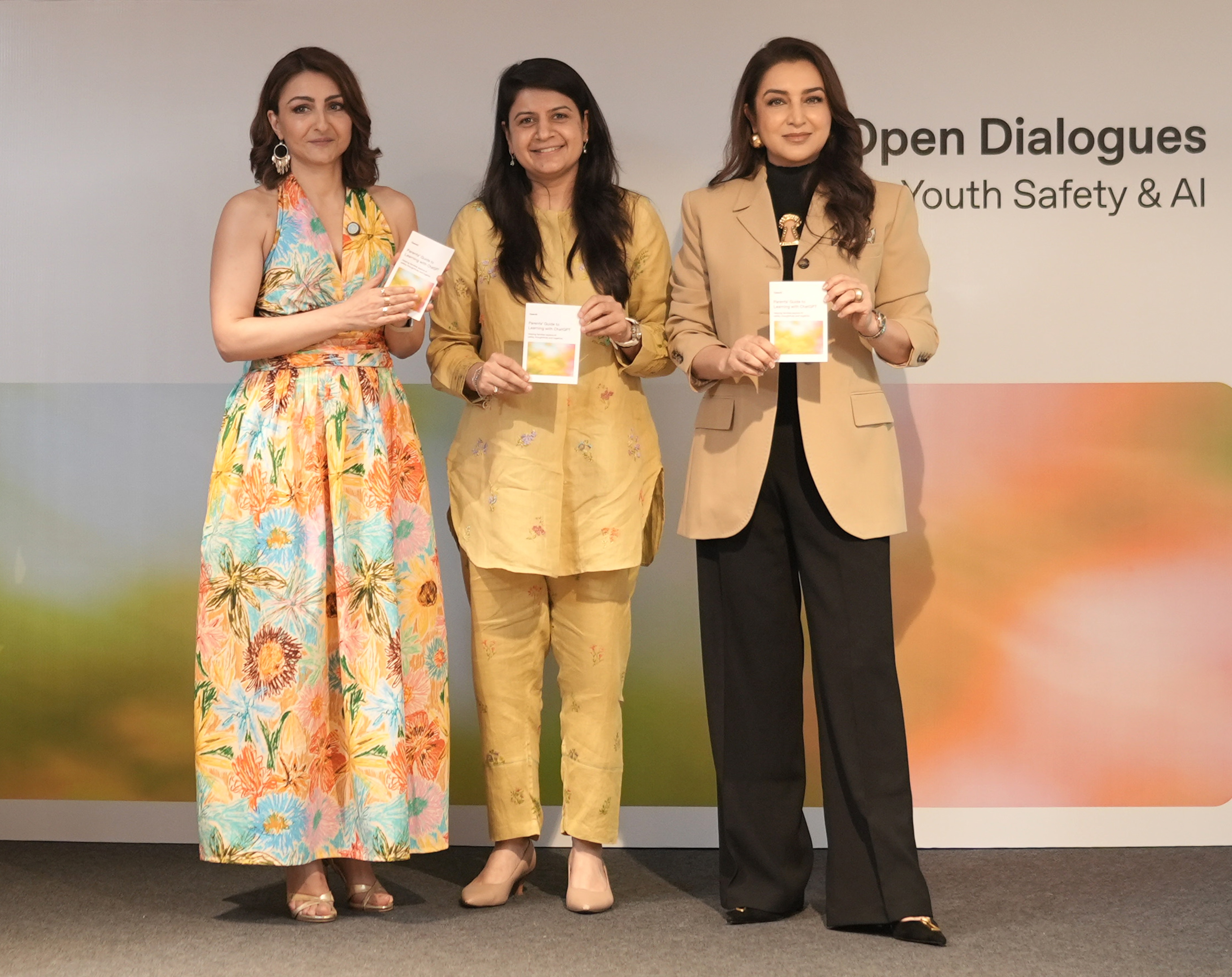
On the sidelines of this announcement, OpenAI hosted ‘Open Dialogues on Youth Safety and AI’ in Mumbai, with actors and authors Tisca Chopra and Soha Ali Khan sharing their perspectives and experiences of navigating AI as parents. At the event, OpenAI also launched its ‘Parents’ Guide to Learning with ChatGPT’, a practical resource to help parents understand ChatGPT for Teens, set up parental controls, support learning, and build healthy AI habits at home. The session brought together parents, educators and public voices to discuss how young people can use AI safely and responsibly.
Pragya Misra, Head of Strategy & Global Affairs, India, OpenAI, said,
“Parents and educators play an important role in how young people learn, create and explore with AI. That is why we created the Parents’ Guide to Learning with ChatGPT. Young people should not have to choose between opportunity and protection. They benefit most when the adults around them stay involved, ask questions, encourage critical thinking, and help build healthy, age-appropriate boundaries around how AI is used.”
Soha Ali Khan, actor and author, said,
“As a parent, I often think about the kind of relationship our children will have with AI. We encourage them to question what they see, think independently, and in the near future, use technology without surrendering their judgement to it. That is why these conversations matter so much. If we want children to grow up confident, humane, and discerning in an AI-shaped world, then curiosity, critical thinking and the guardrails around technology have to matter just as much as the technology itself.”
Tisca Chopra, actor and author, said,
“My daughter, Tara, is a teenager now, and I can tell you that she probably knows a lot more about ChatGPT than I do. Spending time with the OpenAI team to understand features like Study Mode and Parental Controls has helped me understand that these tools can actually open the door to better conversations. As a parent, it’s not about having every answer, but being informed enough to ask the right questions, set thoughtful boundaries, and stay meaningfully involved in how the next generation learns and grows with AI.”
Together, ChatGPT for Teens, the Parents’ Guide and OpenAI’s broader work with families and educators are designed to support age-appropriate protections, give parents greater tools and help teens learn, create and explore with AI while building healthy, real-world relationships with technology.