
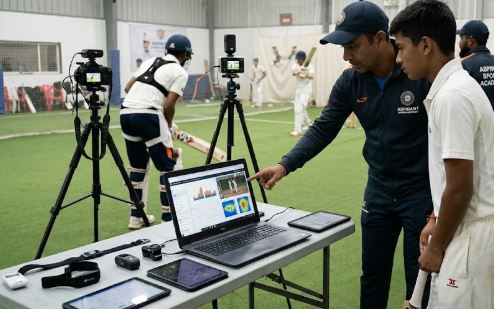
India’s sports industry is entering a new phase of growth as technology changes how athletes train, teams compete and audiences experience sporting events. Decisions that once depended largely on coaching experience and visual assessment are increasingly supported by performance data, digital tracking systems and artificial intelligence. This shift is creating opportunities not only for professional teams but also for technology startups, sports academies, equipment manufacturers and digital media businesses.
India’s broader sports technology market was valued at approximately ₹26,700 crore in FY2024 and is projected to reach ₹49,500 crore by FY2029, according to industry estimates. The market includes a wide range of activities, from fan engagement and digital sports platforms to performance analytics and technology-enabled training.
For businesses, the opportunity extends beyond developing new technology. As sports organisations seek measurable improvements in performance, talent identification and audience engagement, demand is growing for solutions that convert data into practical decisions and commercially valuable services.
Cricket Leads the Adoption of Sports Analytics
Cricket remains a major driver of sports technology adoption in India. The scale of domestic competitions, the commercial reach of the Indian Premier League and the growing importance of player evaluation have increased the value of detailed performance insights.
Teams can analyse batting patterns, bowling variations, fielding movements and opposition strategies to make more informed decisions. Video analysis and statistical models can help coaches identify technical weaknesses, evaluate consistency and prepare match-specific strategies. During player selection and auctions, performance data can also complement traditional scouting by helping teams assess a player’s potential contribution and value.
This creates a specialised market for sports analytics platforms, video-analysis tools, tracking systems and data services. Technology providers can serve professional franchises, cricket academies, broadcasters and training centres, each with different requirements and budgets.
The commercial opportunity is particularly significant when analytical tools move beyond elite competitions and become affordable for smaller teams and emerging players.
Performance Analytics Is Changing Athlete Development
Sports analytics is increasingly focused on understanding how athletes perform, recover and respond to training. Wearable devices and tracking systems can measure indicators such as movement, acceleration, speed and training workload. Depending on the technology used, these measurements can help coaches assess physical demands and adjust training programmes.
The value lies in using this information to support better decisions. Coaches can identify changes in workload, compare performance over time and develop more individualised training plans. When combined with qualified medical and coaching expertise, appropriate monitoring may also help identify potential warning signs of fatigue or overtraining.
For sports technology companies, this creates demand for wearable devices, athlete-monitoring software, data dashboards and services that interpret complex measurements. However, such tools do not guarantee injury prevention or improved performance. Their effectiveness depends on data quality, suitable interpretation and integration into an athlete’s overall training programme.
As awareness grows, performance analytics has the potential to become a more regular part of athlete development rather than a resource reserved for high-budget teams.
Opportunities Are Expanding Beyond Cricket
Although cricket commands substantial commercial attention, technology adoption across other sports is creating additional opportunities.
Football teams can use tracking systems and video analysis to study player positioning, movement and tactical patterns. Kabaddi teams can examine movement, match intensity and individual contributions, while badminton and athletics programmes can use video-based assessment and performance measurements to refine technique and training.
Computer vision is also creating new possibilities by extracting information from match footage. Depending on the system, automated analysis can help identify player movements, track selected actions and reduce the time required for manual video review.
For startups, the opportunity is to develop sport-specific solutions rather than rely on a single model for every discipline. Different sports require different measurements, coaching workflows and performance indicators. Businesses that understand these requirements can create more useful products and build stronger relationships with teams and training institutions.
Artificial Intelligence Is Creating New Business Models
Artificial intelligence is becoming an important part of sports analytics because it can help process large volumes of video and performance data more efficiently. Software can support the identification of patterns, compare performances and assist coaches in reviewing matches or training sessions.
For broadcasters and digital platforms, automated analysis can also enrich live coverage with statistics, player comparisons and tactical insights. These features can make broadcasts more informative and create additional opportunities for sponsorship, premium content and audience engagement.
Sports technology businesses can monetise these capabilities through subscription-based software, licensing agreements, analytics services and customised solutions for teams or leagues. Smaller academies may prefer affordable monthly subscriptions, while professional organisations may require specialised systems and dedicated analytical support.
The strongest commercial models will be those that solve clear problems, fit existing coaching practices and demonstrate value beyond producing large amounts of data.
Grassroots Sports Can Become a Major Growth Market
One of the most important opportunities for India’s sports technology sector lies in talent identification and grassroots development. Sports academies, schools and training centres need practical ways to assess athletes, track progress and identify potential across different age groups and regions.
Digital assessment tools can help standardise selected measurements, maintain athlete development records and give coaches a clearer picture of progress over time. When used appropriately, such systems can support more structured talent development and help identify promising athletes who might otherwise receive limited exposure.
Government-backed sports development programmes, including Khelo India, provide a broader context for strengthening sporting infrastructure and nurturing talent. Technology providers can potentially support these efforts through assessment platforms, training tools and athlete-management systems.
However, the wider adoption of sports technology will depend on affordability, reliable infrastructure, trained staff and access beyond major cities. Solutions designed for grassroots programmes must be easy to operate and suitable for the resources available to local institutions.
Fan Engagement Expands the Commercial Opportunity
Performance analytics is only one part of India’s sports technology market. Digital platforms, interactive broadcasts, mobile applications and online communities are also changing how fans follow sporting events.
Real-time statistics, personalised content and interactive viewing experiences can increase audience engagement and create additional commercial opportunities for media businesses, advertisers and sports organisations. Data can help platforms understand viewing preferences and deliver content that is more relevant to different audiences.
For businesses, this creates opportunities in digital advertising, sports content production, ticketing, merchandise and fan relationship management. Technology can also help sponsors assess audience engagement and understand how their campaigns perform across digital channels.
However, personalisation must be balanced with responsible data practices. Platforms that collect fan information need appropriate safeguards, clear communication and respect for users’ privacy preferences.
Startups and MSMEs Can Participate in the Growth
India’s sports technology ecosystem offers opportunities for businesses beyond large technology developers. Startups and small enterprises can build products and services around software development, video processing, wearable-device integration, sports equipment, data visualisation and analytics support.
Specialised service providers can also help academies, clubs and federations adopt existing technology without building expensive in-house systems. This creates scope for implementation services, training, equipment maintenance and customised reporting.
A major commercial challenge is proving that a solution delivers enough value to justify its cost. Sports organisations may be interested in advanced analytics but remain cautious about recurring expenses, technical complexity and uncertain returns.
Companies can address this by offering modular products, flexible pricing and measurable outcomes. Demonstrating how a tool saves coaching time, improves assessment or supports better resource allocation can be more persuasive than simply promoting its technical features.
Data Quality, Privacy and Affordability Remain Challenges
The growth of performance analytics also brings important challenges. Inaccurate measurements or poorly interpreted results can lead to misleading conclusions. Differences in equipment, playing conditions and data-collection methods can make comparisons difficult, while smaller organisations may lack the expertise needed to interpret complex outputs.
Athlete information requires particular care. Health-related measurements, biometric data and training records can be sensitive, making secure storage, controlled access and clear data-use policies essential. Organisations should establish appropriate arrangements for consent, data sharing and retention, particularly when working with young athletes.
Cost is another barrier. Advanced systems may be beyond the budgets of local clubs and smaller academies. Affordable pricing, straightforward interfaces and practical training will therefore be important in expanding adoption across India’s sports ecosystem.
Businesses that address these concerns can build greater trust and make their solutions more accessible to a wider range of customers.
The Business Future of Sports Performance Analytics
India’s sports technology market is developing at the intersection of athletic performance, digital media and commercial innovation. Cricket continues to provide a strong foundation for adoption, while other sports, grassroots programmes and fan engagement platforms are creating additional avenues for growth.
For businesses, the opportunity is not limited to producing sophisticated tracking devices or artificial intelligence systems. It also lies in making sports data affordable, understandable and useful for coaches, athletes, academies and sports organisations.
As demand for measurable performance insights grows, companies that combine reliable technology with practical expertise can establish new revenue streams and build lasting partnerships across the sporting ecosystem. The long-term potential of sports analytics will depend on its ability to deliver meaningful improvements in decision-making, athlete development and audience experience.