Indian cricket is entering a period of quiet but meaningful transition. Based on reports emerging in February 2026, the Board of Control for Cricket in India (BCCI) has reshaped its central contract system for the 2025–26 season, covering the 2026 calendar year. While central contracts are often viewed through the lens of retainership figures and player rankings, this year’s overhaul goes much deeper. It reflects a clear shift in philosophy—one that prioritises present contribution, workload management, and long-term planning over reputation and legacy.
The reported changes have already triggered widespread debate, particularly with the scrapping of the elite A+ category, the promotion of Shubman Gill to the top tier, and the demotion of long-time stalwarts Virat Kohli and Rohit Sharma to Grade B. Together, these moves signal the beginning of a new chapter in Indian cricket governance.
What Are BCCI Central Contracts and Why They Matter
Introduced in 2005, BCCI central contracts were designed to bring structure, transparency, and financial security to players representing India. Before this system, payments were largely match-based and inconsistent. Central contracts ensured a fixed annual retainer for selected players, rewarding performance, availability, and commitment to national duty.
Over the years, the system evolved into four grades—A+, A, B, and C—each reflecting a player’s role, format involvement, and importance to the national setup. The contracts not only offered financial stability but also shaped career priorities, encouraging players to remain available for India amid the rise of franchise cricket.
For two decades, these contracts have acted as both recognition and responsibility. The 2025–26 cycle, however, marks one of the most decisive departures from past norms.
A+ Category Scrapped: The Biggest Structural Change
The most significant change in the reported 2025–26 contracts is the removal of the A+ category altogether. Previously, Grade A+ carried the highest retainer and was reserved for players who were automatic selections across all three formats—Tests, ODIs, and T20Is.
According to reports, the BCCI concluded that no current player fits that definition anymore. Workload management, selective format participation, and the demands of modern international schedules have made all-format regulars increasingly rare.
By scrapping the A+ grade, the BCCI has compressed the top tier into Grade A, simplifying the structure into three categories:
-
Grade A
-
Grade B
-
Grade C
This move is less about cutting costs and more about aligning contracts with present-day realities rather than outdated benchmarks.
Shubman Gill Leads the New Top Bracket
At the centre of the new contract structure is Shubman Gill, whose promotion to Grade A reflects both performance and leadership trust. As India’s current captain in Tests and ODIs, Gill has become the face of the team’s future.
His rise has been steady rather than sudden. Over the past two seasons, Gill has delivered consistent performances across conditions, handled leadership responsibilities with maturity, and managed workload demands effectively.
Why Gill tops the list:
-
Captaincy roles in two major formats
-
Reliable performances at home and overseas
-
Strong fitness and availability record
-
Central to India’s long-term planning
Gill’s elevation is symbolic. It marks the transition from a generation defined by Kohli and Rohit to one led by players expected to carry Indian cricket into the next decade.
Bumrah and Jadeja Retain Their Elite Standing
Joining Gill in Grade A are Jasprit Bumrah and Ravindra Jadeja, two players whose importance goes beyond statistics.
Bumrah remains India’s premier fast bowler across formats. Despite careful workload management, his impact whenever he plays is unmatched. Match-defining spells, leadership within the bowling group, and consistent performances have ensured his place at the top.
Jadeja’s value lies in his versatility. As a left-arm spinner, middle-order batter, and elite fielder, he continues to be indispensable, especially in Tests and ODIs. His ability to influence games in multiple ways keeps him firmly in the top tier.
Together, Gill, Bumrah, and Jadeja form a compact but powerful Grade A group that blends leadership, experience, and match-winning ability.
Kohli and Rohit Move to Grade B: A Symbolic Moment
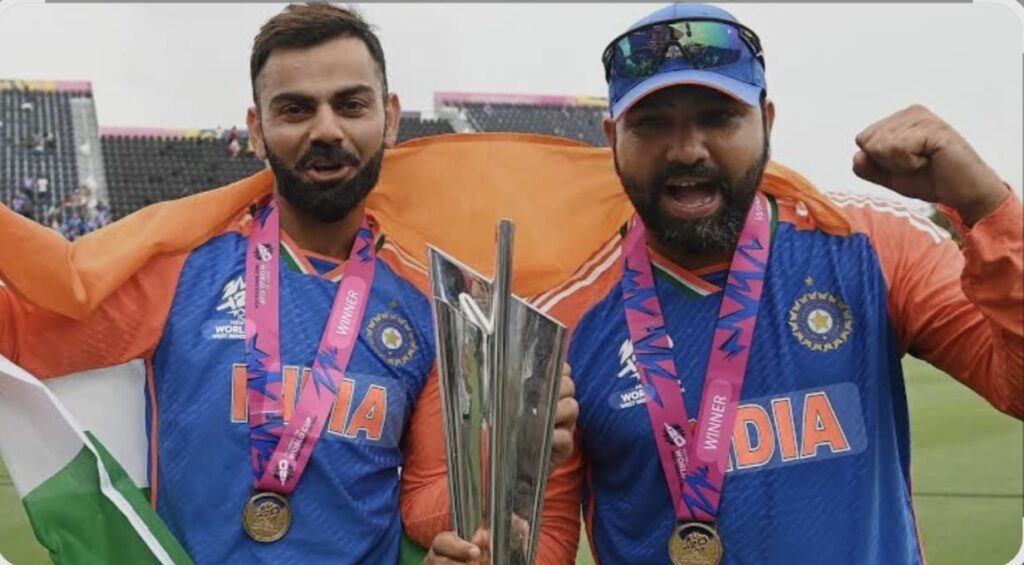
The most talked-about development is the reported demotion of Virat Kohli and Rohit Sharma to Grade B. For over a decade, both players defined Indian cricket’s identity, leadership, and success across formats.
However, both have now stepped away from Test and T20I cricket and are active primarily in ODIs. Under the new performance-and-availability-driven criteria, limited format participation has directly influenced their grading.
Importantly, this move is not seen as a reflection of declining skill or stature. Instead, it highlights a shift in how the BCCI evaluates contribution. Legacy alone is no longer enough to secure top-tier contracts.
While symbolic, the decision underlines a clear message: central contracts are about present involvement, not past achievements.
Grade B: Experience Meets Transition
Grade B features a blend of senior players and established match-winners:
-
Rohit Sharma
-
Virat Kohli
-
Suryakumar Yadav
-
KL Rahul
-
Hardik Pandya
-
Rishabh Pant
-
Mohammed Siraj
-
Kuldeep Yadav
-
Yashasvi Jaiswal
-
Shreyas Iyer
-
Washington Sundar
This group represents the backbone of India’s current squads across formats. Some are senior leaders managing workloads, while others are entering their prime years. The grade reflects consistency but also acknowledges rotation, injury management, or format-specific roles.
Grade C: Investing in the Future
Grade C continues to serve as the entry point for emerging and rotational players. This season’s list reflects a strong focus on youth and depth:
-
Axar Patel
-
Tilak Varma
-
Rinku Singh
-
Shivam Dube
-
Sanju Samson
-
Arshdeep Singh
-
Prasidh Krishna
-
Akash Deep
-
Dhruv Jurel
-
Harshit Rana
-
Varun Chakravarthy
-
Nitish Kumar Reddy
-
Abhishek Sharma
-
Sai Sudharsan
-
Ravi Bishnoi
-
Ruturaj Gaikwad
For many, inclusion in Grade C is a stepping stone. It offers financial security, recognition, and a clear pathway upward based on performance and consistency.
Notable Omissions Raise Questions
Several exclusions have drawn attention. Mohammed Shami, who featured in Grade A last year, is reportedly not included this time. Other absentees include Ishan Kishan, Sarfaraz Khan, and Rajat Patidar.
Shami’s omission is particularly striking, given his past match-winning contributions. However, recent availability, fitness concerns, and long-term planning appear to have influenced the decision.
These exclusions reinforce the board’s sharper focus on current readiness rather than past impact.
Women’s Central Contracts Continue on a Parallel Track
The BCCI has also continued its structured approach to women’s central contracts, maintaining a three-tier system.
Grade A:
Harmanpreet Kaur, Smriti Mandhana, Jemimah Rodrigues, Deepti Sharma
Grade B:
Renuka Thakur, Shafali Verma, Richa Ghosh, Sneha Rana
Grade C:
Radha Yadav, Yastika Bhatia, Harleen Deol, Arundhati Reddy, Kashvee Gautam, Amanjot Kaur, among others
The structure reflects continuity and gradual growth, mirroring the broader development of women’s cricket in India.
Beyond Players: Administrative Reforms in Focus
Alongside player contracts, the BCCI is also reviewing a long-pending proposal to increase match fees for domestic umpires and referees. If approved, it would strengthen grassroots officiating and improve the overall domestic ecosystem.
Such reforms suggest a broader intent to professionalise all levels of Indian cricket, not just the international game.
What This Overhaul Really Means
At its core, the 2025–26 contract reset reflects a clear philosophy:
-
Current contribution matters more than reputation
-
Multi-format availability carries weight
-
Fitness and workload management are non-negotiable
-
The future must be planned, not postponed
The removal of the A+ category and the compression of the top tier indicate realism rather than reduction. Indian cricket is adapting to modern demands, crowded calendars, and evolving player roles.
A Quiet but Powerful Transition
The BCCI Central Contracts 2025–26 are not just about who moved up or down a grade. They represent a recalibration of values in Indian cricket. While the demotion of icons like Kohli and Rohit marks the end of an era symbolically, it also clears space for the next generation to lead.
With Shubman Gill at the forefront, supported by Bumrah and Jadeja, Indian cricket is signalling readiness for the future—measured, structured, and performance-driven.
As final approval awaits the BCCI Apex Council’s confirmation, one thing is already clear: this is not a cosmetic reshuffle. It is a deliberate reset, setting the tone for how excellence, commitment, and leadership will be recognised in the years ahead.