
Bhubaneswar, June 4 (BNP): Concerns are mounting over the possible impact of El Niño on weather patterns this year, with meteorologists warning that the climate phenomenon could trigger drought-like conditions across several regions between June and August. The development has raised fresh apprehensions about rainfall deficiency, agricultural productivity, and water availability during the crucial monsoon season.
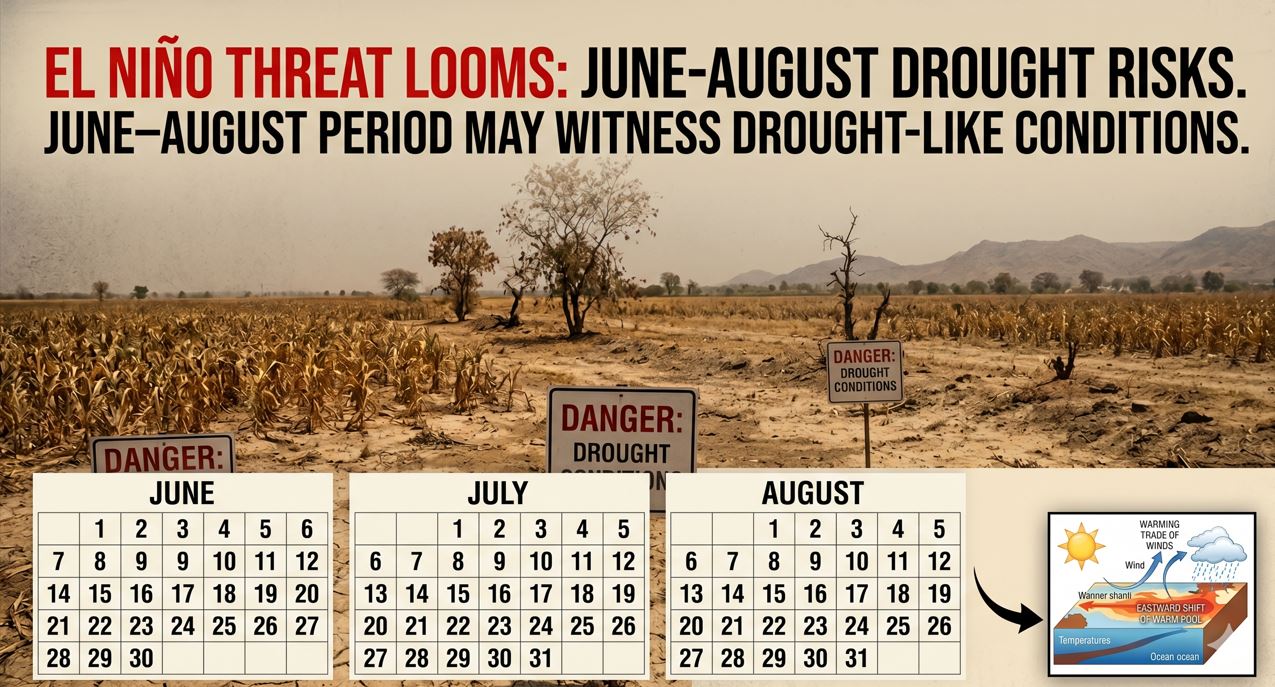
Representational image
El Niño, a naturally occurring climate event, is marked by the abnormal warming of sea surface temperatures in the central and eastern equatorial Pacific Ocean. Though it originates thousands of kilometres away from India, its influence extends globally, often disrupting rainfall patterns and intensifying extreme weather events.
Scientists explain that under normal conditions, strong trade winds push warm ocean waters toward Asia and Australia while allowing cooler, nutrient-rich waters to rise near the South American coast. During an El Niño event, these winds weaken or reverse, causing warm waters to shift eastward and altering atmospheric circulation patterns worldwide.
The resulting changes can significantly affect monsoon systems. In India, El Niño has historically been associated with weaker southwest monsoons and below-normal rainfall. Experts caution that a prolonged El Niño phase could reduce precipitation during the June-August period, increasing the risk of drought conditions in several states and impacting crop yields.
Beyond India, El Niño often causes severe droughts and heatwaves across parts of Asia and Australia, while bringing excessive rainfall and flooding to regions of North and South America. The phenomenon also contributes to a temporary rise in global temperatures by releasing vast amounts of heat from the Pacific Ocean into the atmosphere.
Agriculture experts are closely monitoring the evolving weather situation, as any significant shortfall in rainfall could affect sowing activities, water reservoirs, and food production. Authorities have also been urged to strengthen drought preparedness measures and promote efficient water management practices.
Climate scientists note that while El Niño is a natural part of Earth’s climate cycle, its impacts can be amplified by ongoing global warming, making weather extremes more intense and unpredictable.
With the southwest monsoon season approaching, weather agencies continue to track Pacific Ocean conditions closely to assess the extent of El Niño’s influence on India’s rainfall outlook in the months ahead.